The Longest Night: A Yule Ritual for the Exhausted
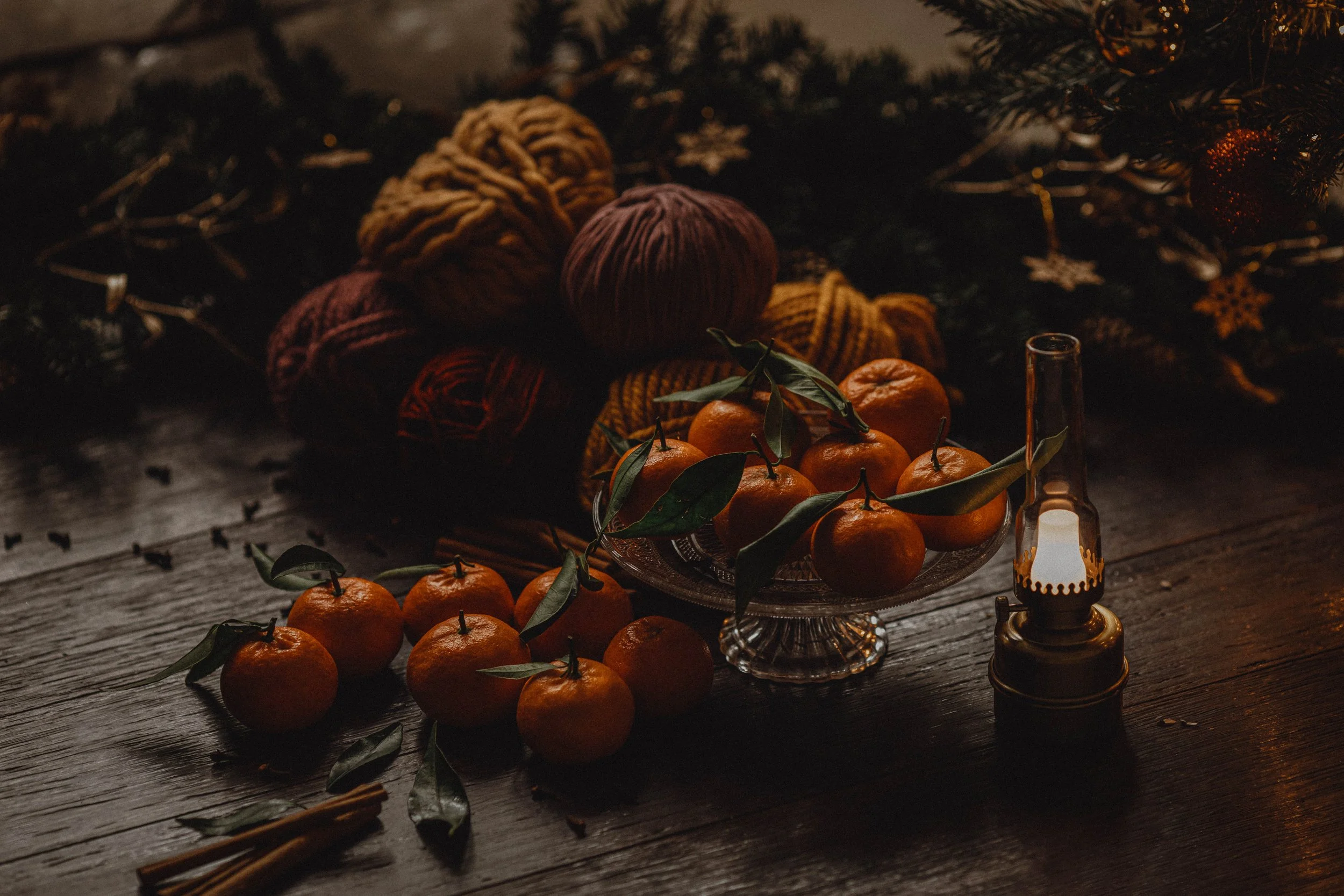
There is a night coming that is longer than any other night of the year.
Yule. December 21st, give or take a day depending on the year and your location. The winter solstice. The moment when the sun reaches its lowest point in the sky, when darkness achieves its maximum reach, and when the earth holds its breath before the slow, inevitable return of light.
This is not a metaphor. This is science. Astronomy. This is the literal turning point of the year.
And if you're exhausted right now—if you're barely holding it together, if you have nothing left to give, if you can't imagine mustering energy for one more thing—then this night was made for you.
What the Winter Solstice Actually Is
Let's start with the facts, because the solstice deserves more than vague mystical language. It deserves accuracy.
The winter solstice occurs when the Earth's axial tilt is farthest from the sun. For those of us in the Northern Hemisphere, this creates the shortest day and longest night of the entire year. The sun appears to stand still in the sky—which is actually what "solstice" means: sol (sun) + sistere (to stand still).
After this moment, imperceptibly at first, the days begin to lengthen again. The sun begins its return. Light is reborn, not all at once, but degree by patient degree.
Our ancestors understood this as the hinge point of existence. The ancient Romans celebrated Saturnalia. The Norse honored Yule. The Druids gathered at Stonehenge, which is aligned specifically to capture the solstice sunrise. Across cultures and continents, humans marked this night as sacred—the moment when death meets life, when darkness acknowledges light, when what was makes space for what will be.
They lit fires. They kept vigil. They stayed awake through the longest night to bear witness to the return of the sun.
They understood what we've forgotten: that darkness is not the enemy. Darkness is the container in which light is reborn.
Why This Matters for Your Exhaustion
Here's what I want you to understand: the exhaustion you're feeling right now isn't random. It's not a personal failing or a sign that you're broken or proof that you're not spiritual enough.
You're exhausted because you've been living through the darkest part of the year while being told to shine your brightest.
The solstice is the astronomical evidence that you're supposed to be tired right now. That going inward isn't avoidance—it's alignment. That rest isn't laziness—it's participation in the actual rhythm of the planet you live on.
December's exhaustion is preparing you for this moment. For the longest night. For the chance to finally stop fighting and start surrendering.
Because here's the spiritual truth underneath the astronomy: nothing new can be born until the old has completely died. No light returns until darkness has had its full reign. No spring comes without winter's absolute dominion.
The solstice is the proof that darkness ends. But only after it's been allowed to be fully, completely dark.
A Ritual for the Too-Tired
I'm not going to give you an elaborate ritual with seventeen steps and a shopping list of obscure supplies. You're exhausted. You don't need more to do.
Instead, I'm going to give you the simplest, oldest ritual there is: bearing witness to the dark.
Here's what you do:
On the night of the solstice (or as close to it as you can manage), turn off all the lights in your home. Every single one. Let your space become as dark as possible.
Sit in that darkness. Just sit there. Let your eyes adjust. Let the dark become something other than scary or wrong or awkward. Let it become what it actually is: a container. A womb. The space where transformation happens.
Stay there for as long as it feels right. Five minutes. Twenty minutes. An hour. However long it takes for you to stop fighting the darkness and start resting in it.
Then—and only then—light one single candle.
Watch that small flame push back the dark. Not violently. Not all at once. Just steadily, patiently, the way the sun will return starting tomorrow morning. The way light always returns after darkness has done its work.
Sit with that candle. Let it be enough. Let it be proof that light always comes back, even after the longest night.
That's it. That's the ritual.
No elaborate altar. No perfect words. No performance. Just you, the dark, and the evidence that light returns.
What the Darkness Teaches
When you sit in the dark like this—really sit, really let it be dark—something shifts.
You stop trying to be productive. You stop performing. You stop pushing. Because you can't. There's nothing to see, nothing to do, and nowhere to go. There's only the dark and your breathing and the knowledge that you're still here.
This is what the earth has been doing since November. This is what the trees know, what the hibernating animals understand, what the seeds in frozen ground trust completely: that doing nothing is sometimes the most important work there is.
The darkness teaches you that rest isn't a reward for productivity. Rest is the foundation of all growth. Nothing blooms without first going dormant. Nothing is born without first gestating in the dark.
Your exhaustion has been trying to teach you this all month. The solstice is your chance to finally listen.
The Return of Light (Eventually)
Here's what happens after the solstice: nothing dramatic. The next day is maybe one minute longer than the day before. Maybe less. You probably won't even notice.
But it's begun. The return of light. Slow, patient, inevitable.
This is how all real transformation works. Not in sudden bursts of motivation or dramatic overnight changes, but in imperceptible degrees. One minute of light, then another, then another, until suddenly it's March and you can't remember when it got so bright.
The work you do at the solstice—the surrender, the rest, the sitting in darkness—this is what allows the light to return. Not because you earned it or manifested it or tried hard enough, but because you stopped fighting long enough to let the natural cycle continue.
You can't force spring. But you can stop preventing winter from doing its work.
This Is the Work We Do in The Unfolding
In The Unfolding membership, December is dedicated entirely to this threshold work. To understanding the solstice not as a single night but as a spiritual posture. To learn how to be with darkness instead of immediately reaching for light. To recognize what needs to end before anything new can begin.
We work with the longest night as a teacher. We explore what it means to rest not as self-care but as spiritual practice. We learn to trust that dormancy isn't death—it's preparation.
Because this is the truth I've learned after 17 years of seasonal work: when you align yourself with the actual rhythms of the earth, when you stop fighting the season you're in, when you let the solstice teach you what it knows about darkness and light and the space between—everything changes.
Not all at once. Not dramatically.
One degree at a time. The way the sun returns after the longest night.
Join The Unfolding and learn to work with the solstice wisdom instead of against it. December's full content is waiting for you—rituals, tarot, seasonal practices, and the community of people who understand that rest is revolutionary.
The Unfolding is a seasonal membership for people who are ready to stop fighting the natural rhythms of the year and start working with them. Each month, we explore the spiritual, energetic, and practical wisdom of the current season. Learn more and join us here.