Qajar Oracle Review
This page may contain affiliate links which may allow us to collect a commission when you click and make a purchase through the links on our site. There is no additional cost to you for doing so.
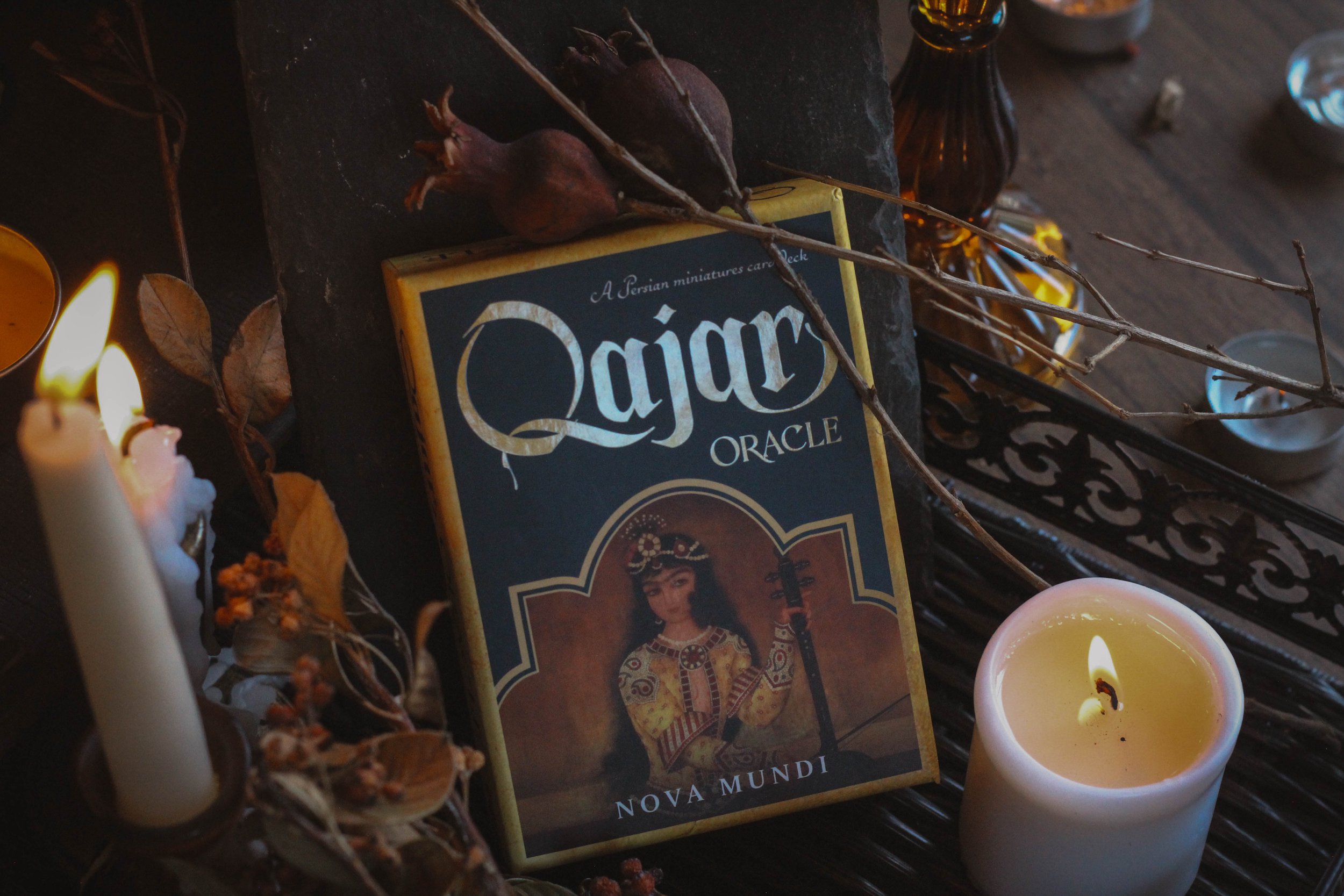
Title: Qajar Oracle
Created by: Nova Mundi
Publisher: Rockpool Publishing
Price: $26.95
Number of cards: 44
Card size: 5 x 3.5 in
Box size: 5.5 x 4 x1.5 in approx
Guidebook pages: 156
Purchased or gifted?: review copy gifted by Rockpool Publishing
Absolute favorite card: Attention Seeker
Other favorites: (in order from most beloved): Hypocrite, Oppressor, Idealist, Significator, Image Conscious, Influencer, Gaslighter, Condescending
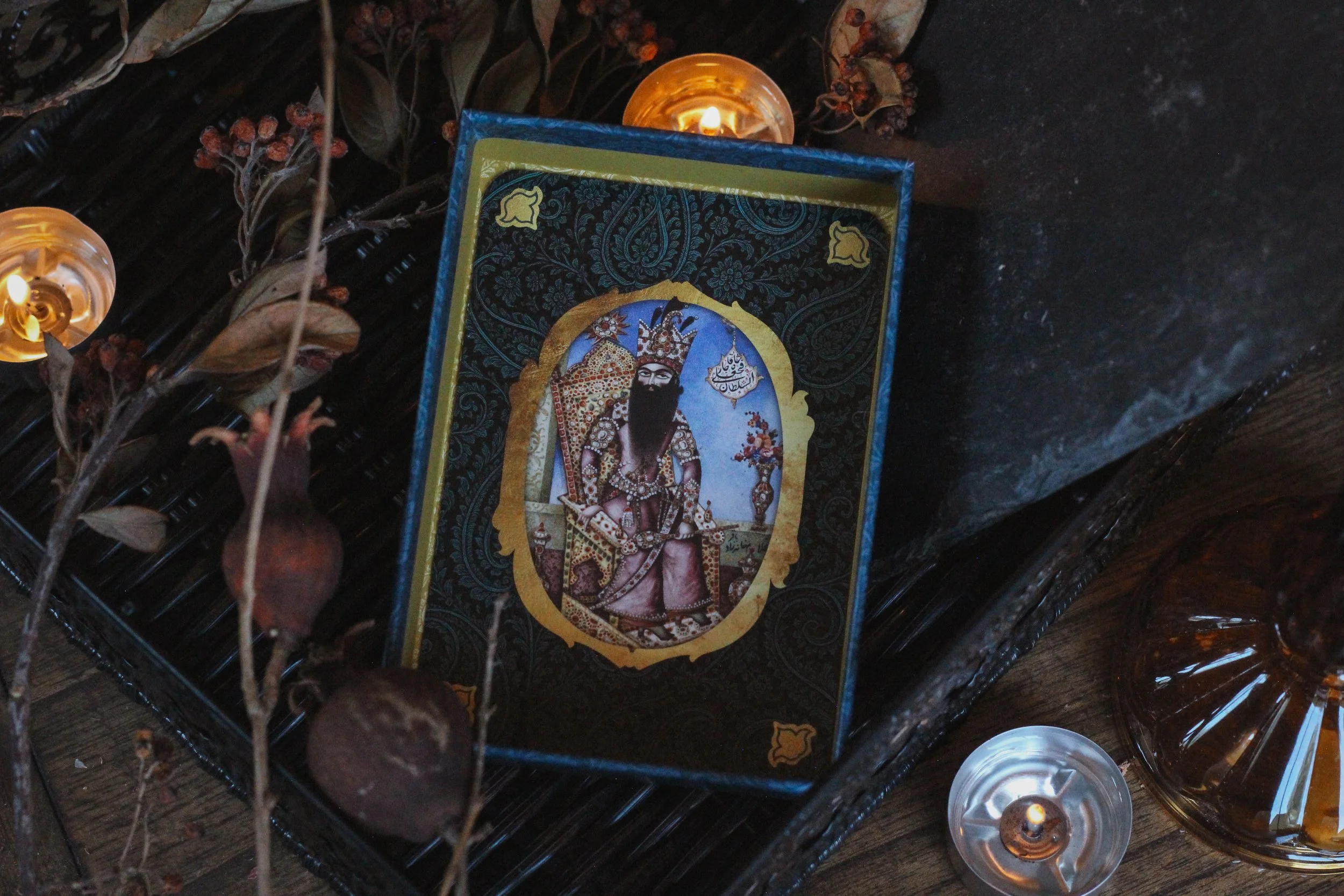
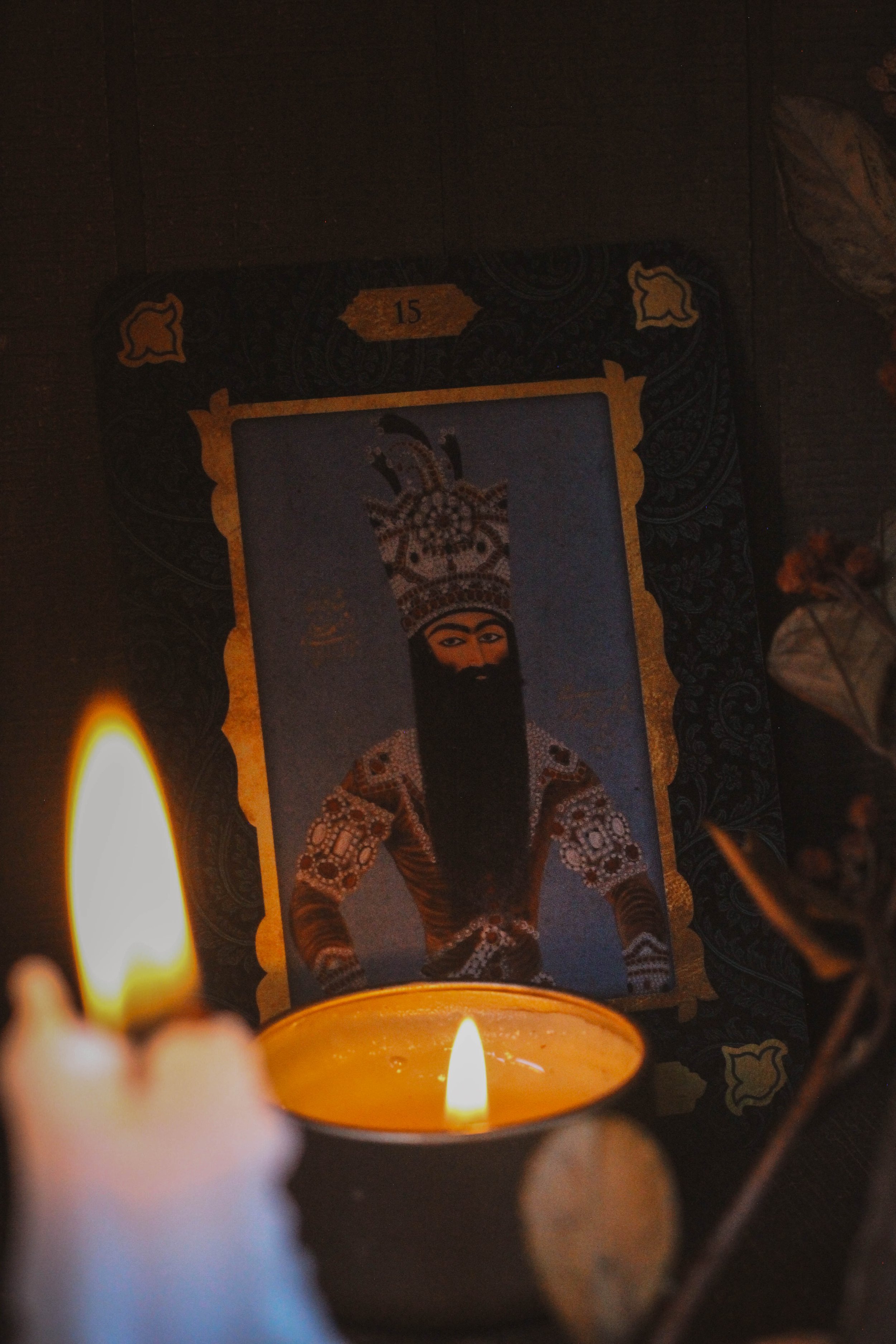
Notable detail: Significator Card
Season: Late Summer
Sabbat: Samhain
Sign: Scorpio
Element: Earth
Deck compliment: Smith - Waite Centennial Edition
Collective Pull: Gullible
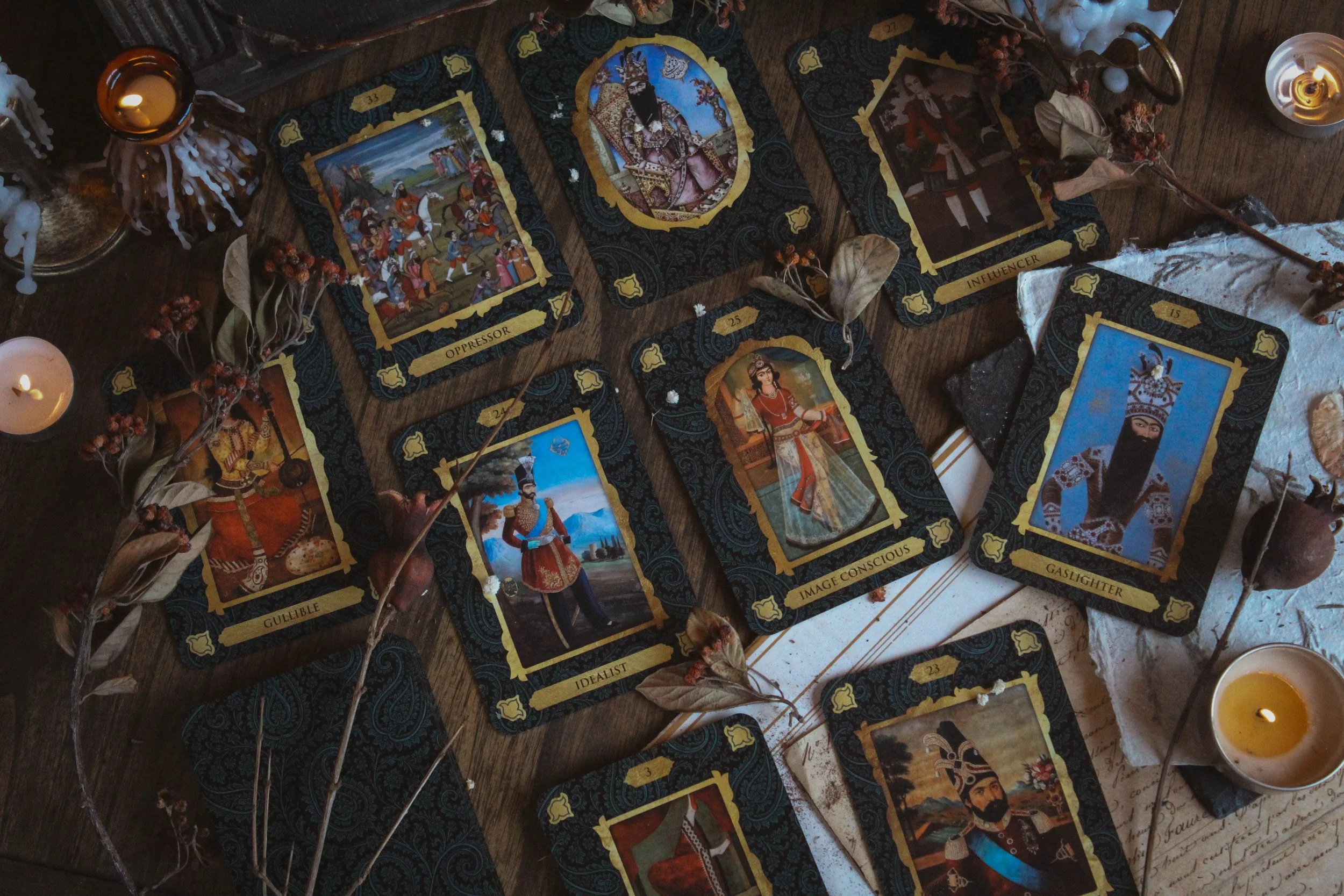
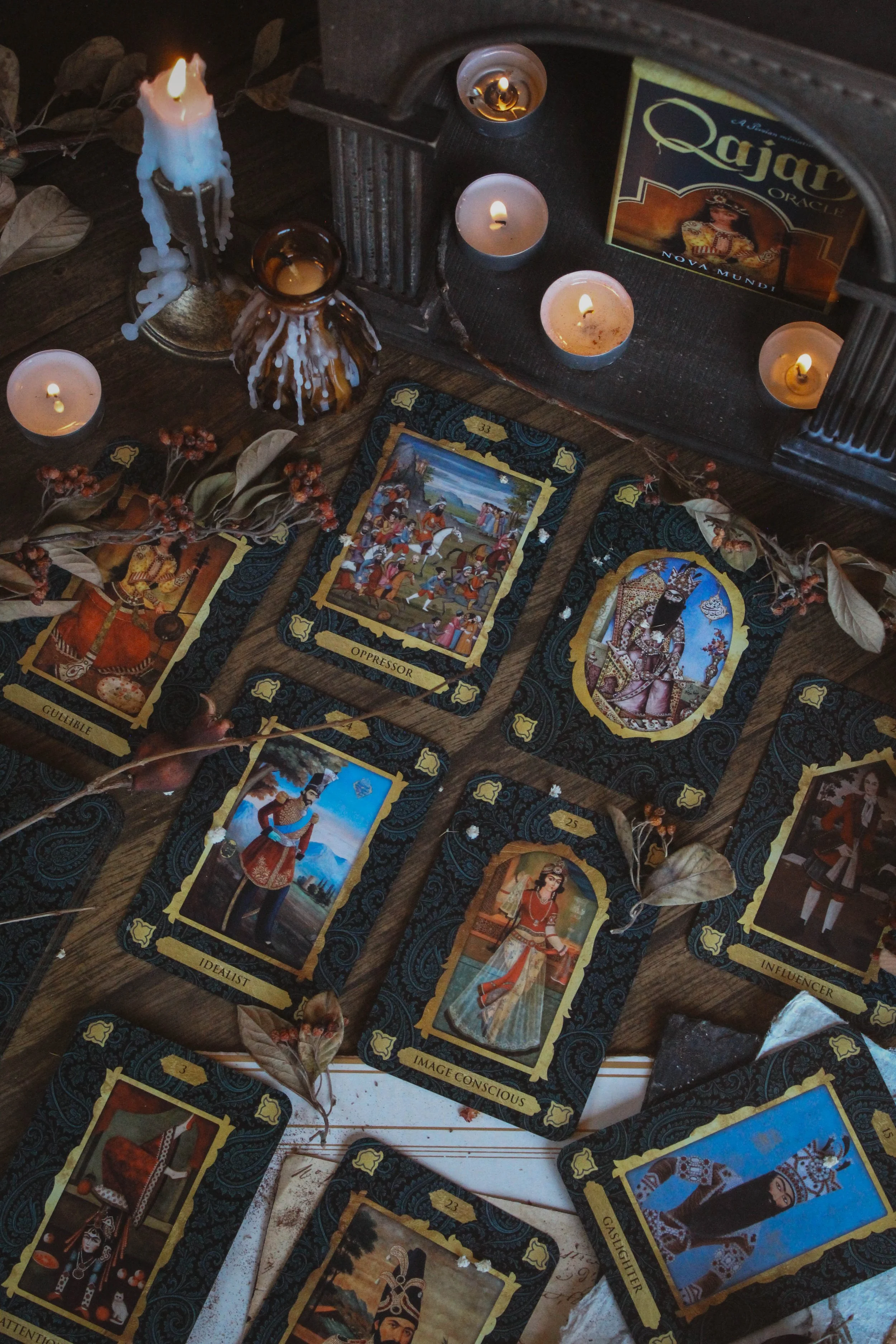
Some of my favorites
First Impressions
I’m really looking forward to this review. This feels like a unique deck and just on a quick pass, there are already things that I love about it which of course I’ll dig into as we go along. Recently, I found this image on Pinterest that showed a timeline of art history. Well this pin had loads of comments from people complaining about how the timeline only referenced western art or European art and left out many other artforms from Asia, Latin America, Africa and quite a few people mentioned Qajar art specifically.
I have a pretty good working knowledge of art history, especially European art but I’m by no means an expert. I had never heard of Qajar art prior to seeing this deck and then I saw the word again that very same week. And I love to go on a deep dive through a rabbit hole. That’s what excites me about this deck the most. I love to learn so whenever I get something be it a ritual tool or something from a magazine that introduces me to something new, I’m all in. So let’s take a closer look and see if this sparks your interest too and if you’ll add this to your altar.
The Packaging
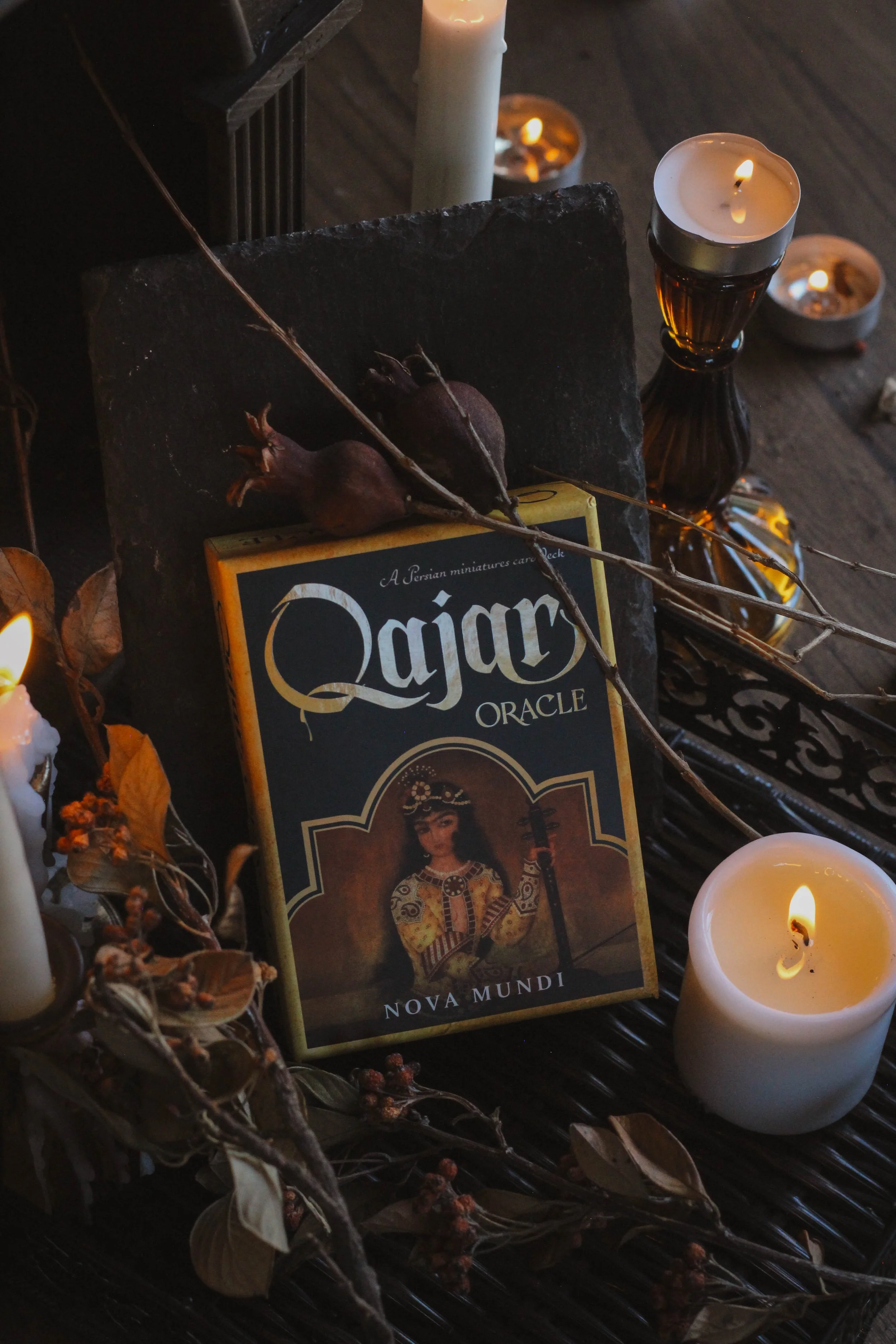
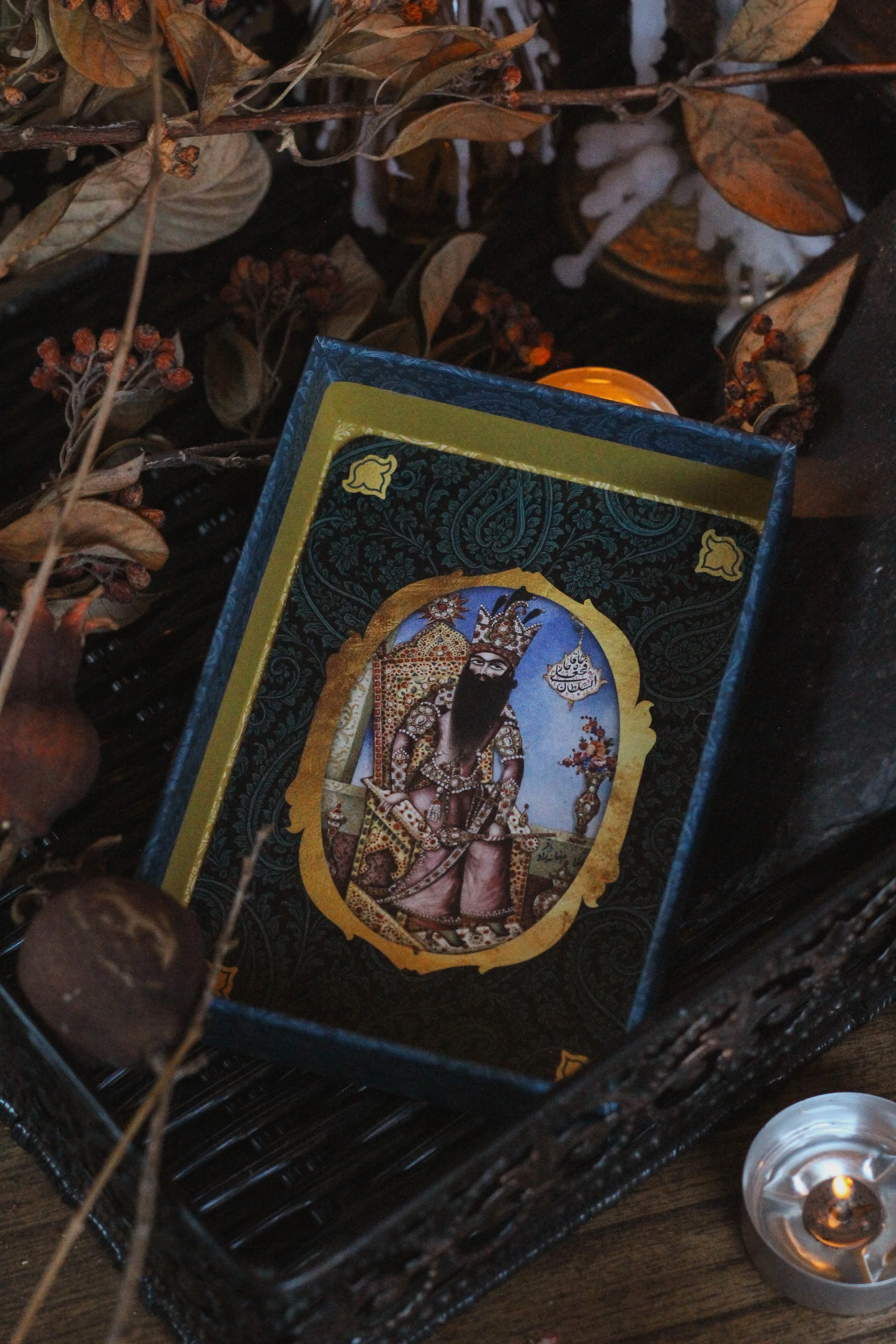
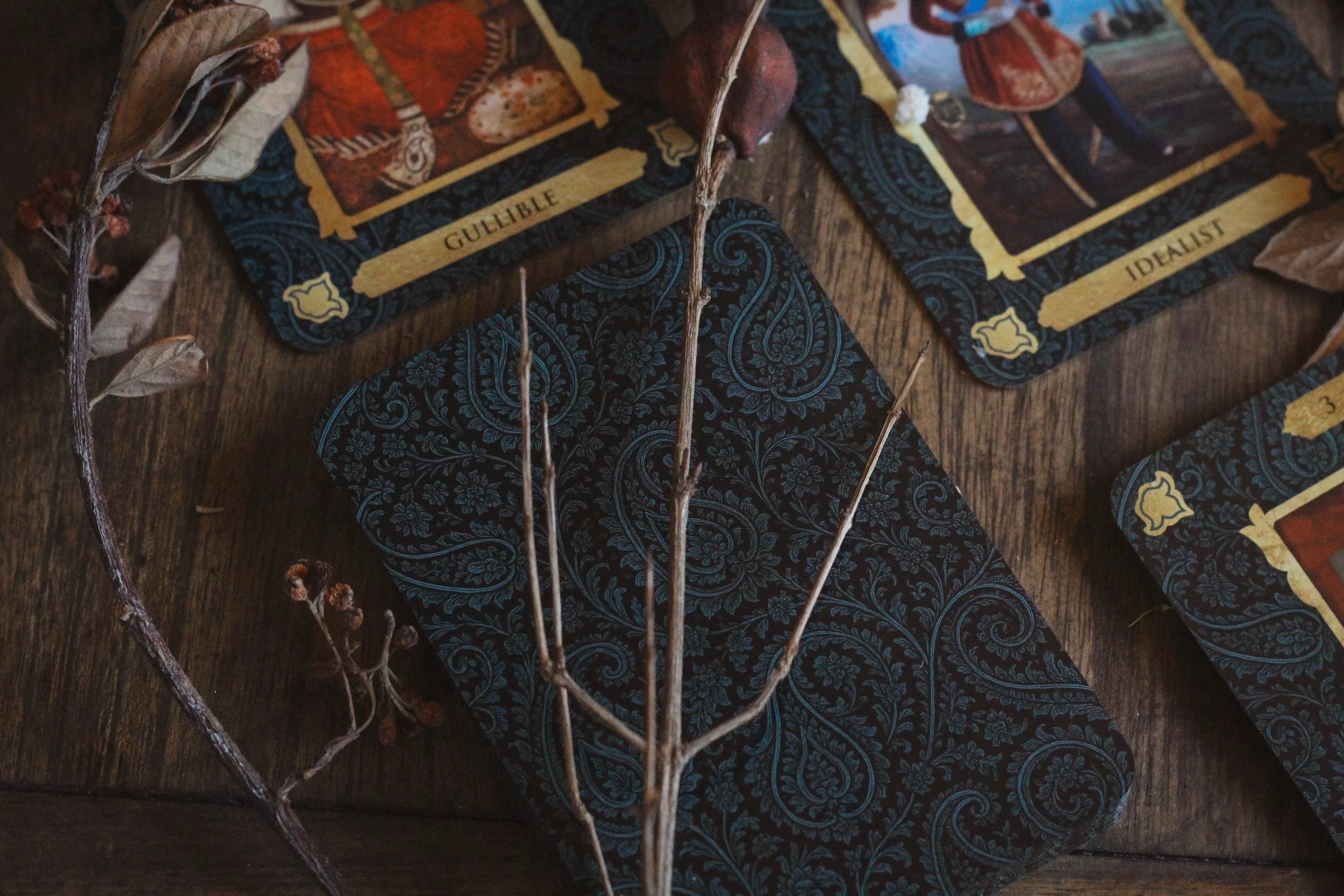
This box is pretty standard for Rockpool but maybe doesn’t have as many of the bells and whistles you might normally find. It’s a matte printed, two piece box in a navy and yellow color palette. There’s a paisley print along the sides of the bottom half of the box as well as inside both the top and bottoms of the box. The cards are gilded with your standard yellowish gold.
I get the more subdued look. It gives it a more vintage, old world aesthetic to match the art this is ultimately pulled from. Though I do wish the name on the box had been in gold foil at the very least. We tend to think of ancient things as being humble but the truth is that ancients used gold and all sorts of metal and shiny things. It would be interesting to see if any of the publishers find a way to do foil that looks like metal that has patina.
The cardstock is pretty standard too. The backs feature the same paisley pattern from the box and you get a good amount of that on the front of the card too. The art doesn’t take up the full card front. Instead, it has a gold border and then the navy paisley border. This deck is described as “a Persian miniatures card deck” so I’m assuming the borders make it feel more like a miniature.
Notable Detail: Significator Card
The Guidebook
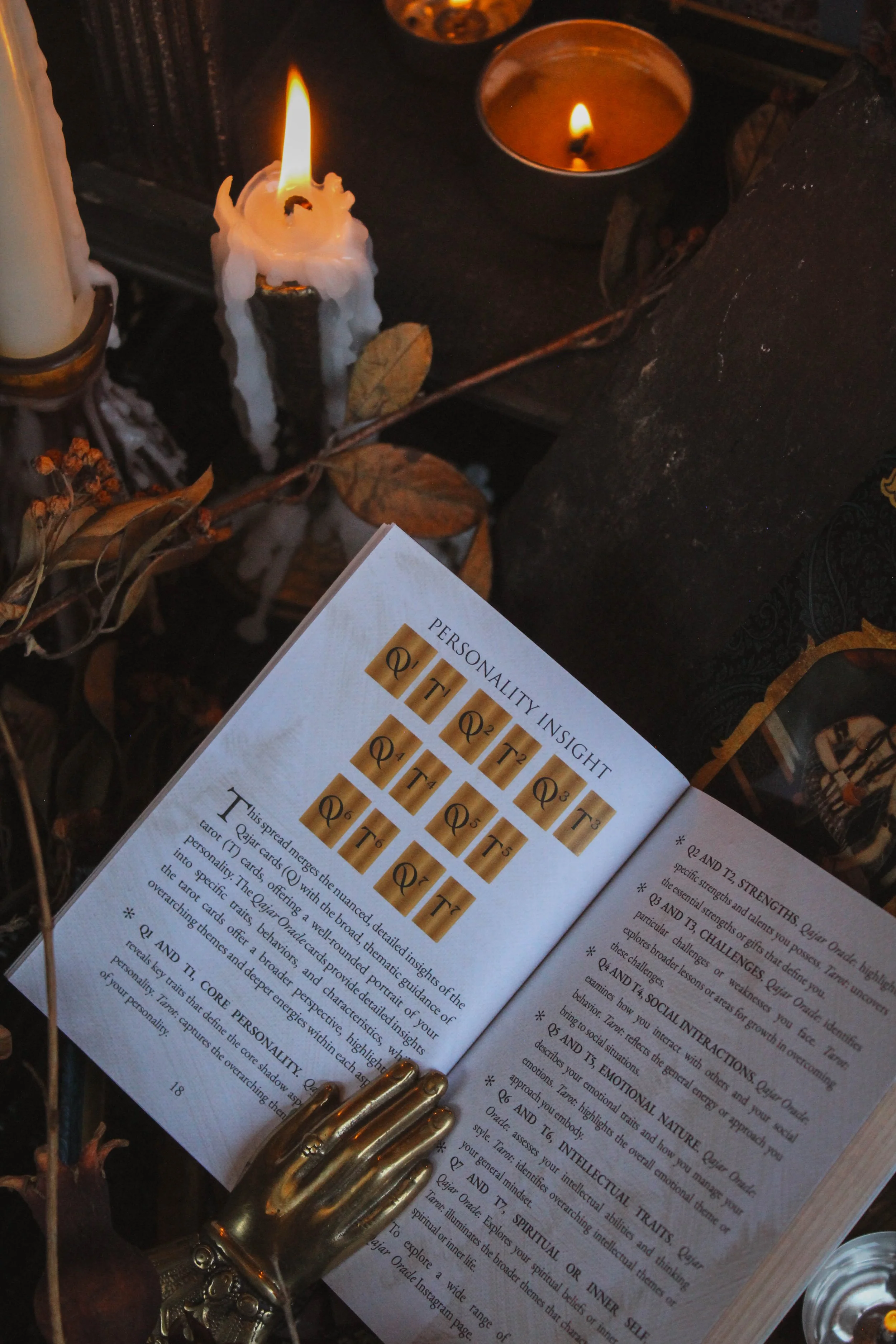
The guidebook is full color of course which is standard for Rockpool. Inside you will find:
An intro
About the deck
How to use the cards
Initiating a reading
Four spreads
Card meanings
Qajar Dynasty Paintings
My favorite part of the guidebook is under the how to use the cards section and is titled “storytelling.” Many authors utilize tarot and oracle in both writing and in their storytelling and yet, I think it's one of most underserved niches in tarot and oracle. There are sooooooo many decks out now and much of the information is pretty much the same. It’s always nice to see a deck with something new to say or at least, something that isn’t said often enough.
Having said that, I find myself chuckling a bit with the number of times I’ve read authors talking about combining tarot and oracle cards in a reading. That just wasn’t a thing several years ago. Plenty of people did it but it wasn’t something that was regularly mentioned in guidebooks but now, it’s all over the place including this guidebook.
Anyway, for each card you get a small image of the card which I’m pretty surprised by. Normally Rockpool does either full page images or pretty close to it but these are really small. I do understand that this is from miniature art but I wish the images in the book were bigger, especially with them not being full sized on the cards. You also get the name of the card and the meaning.
What I love most about this deck is the card names. You have things like attention seeker, cynical, denialist, street smart and hypersensitive. In the past three or so years, I’ve found myself kind of bored with the same list of card meanings. Think things like protection, cleansing, manifestation, self-care and wisdom. I’ll be upfront, many if not all of the Seasons of the Witch decks have those same themes and maybe that’s why I’m so bored with them. After writing eight oracles and reviewing hundreds more, I guess I’ve just seen the same things so many times that I’m craving something else.
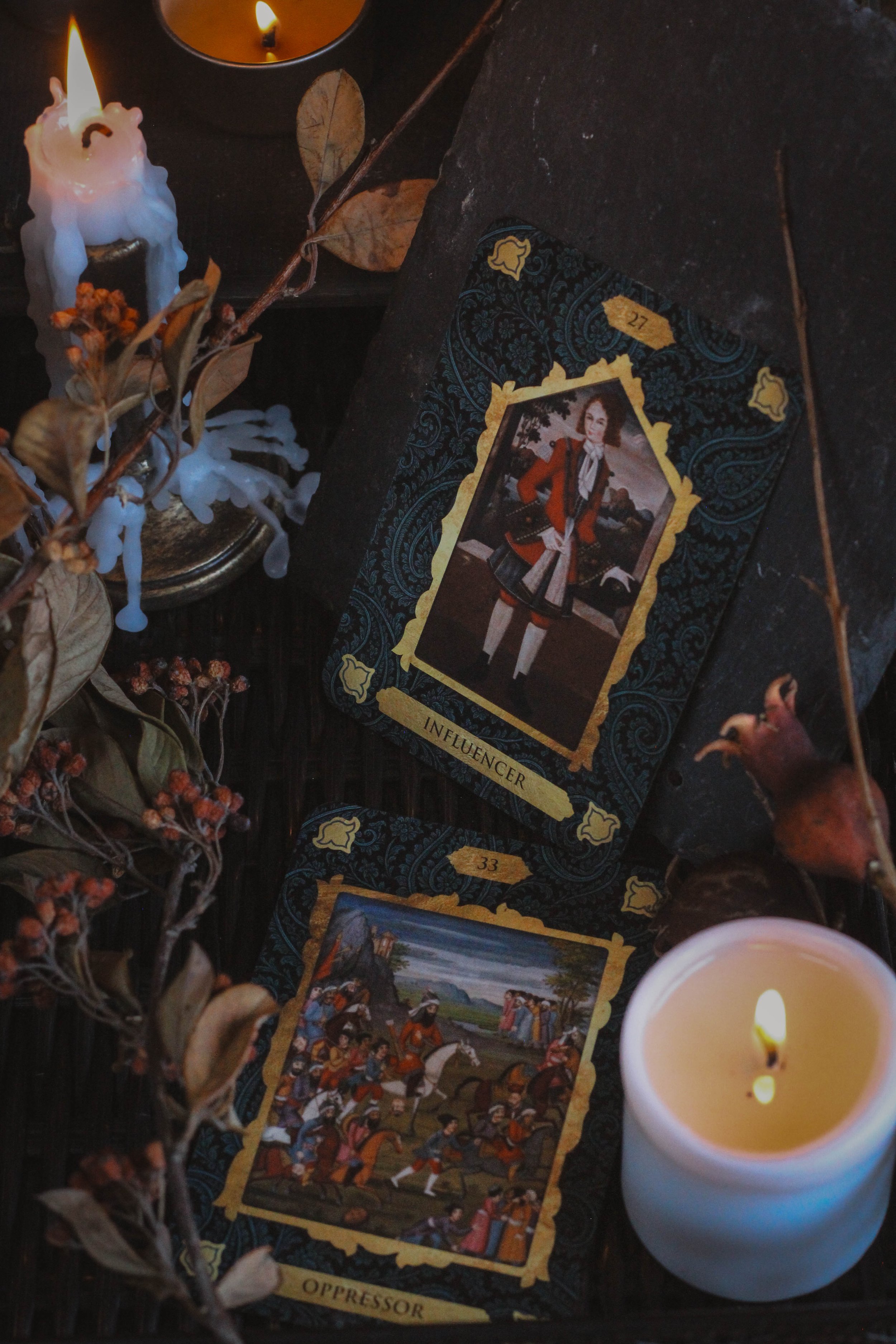
This deck gives you that and yet, these are themes we all experience in life. I loved seeing an Image Conscious and Influencer card. I think that’s just so appropriate for the age of social media and any age really. We tend to think of influencers as a modern thing but every era has had people that everyone else looks to for inspiration. Just having different themes has had me reaching for this deck more than a lot of others recently.
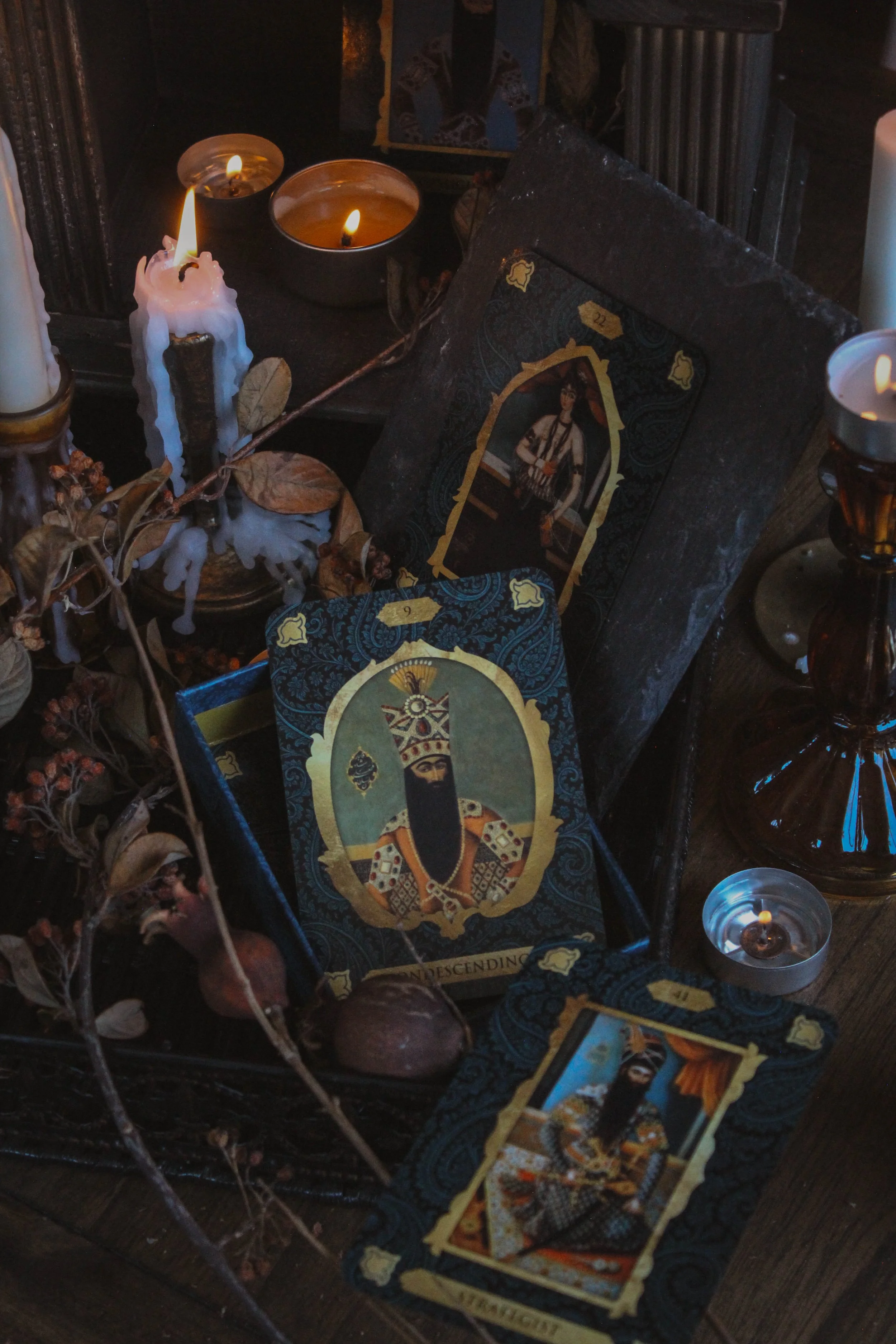
I also love the inclusion of a specific significator card. This is a common enough practice in tarot where you choose one card to represent the querent or the person the reading is about and you place it at the top of your reading table. You can do this with oracle of course but I really like the idea of including a distinct card for this purpose. Nova even encourages people to take this card out and use it with other decks too. Great idea.
Theme
This deck is a celebration of Qajar miniature paintings but also a tool for self-reflection. Of course all oracles are a tool for self-reflection but I think given the card names and meanings, there’s a deeper level of awareness that can come out of this deck. The appendix has a good information about Qajar paintings and the Qajar dynasty that I highly recommend reading.
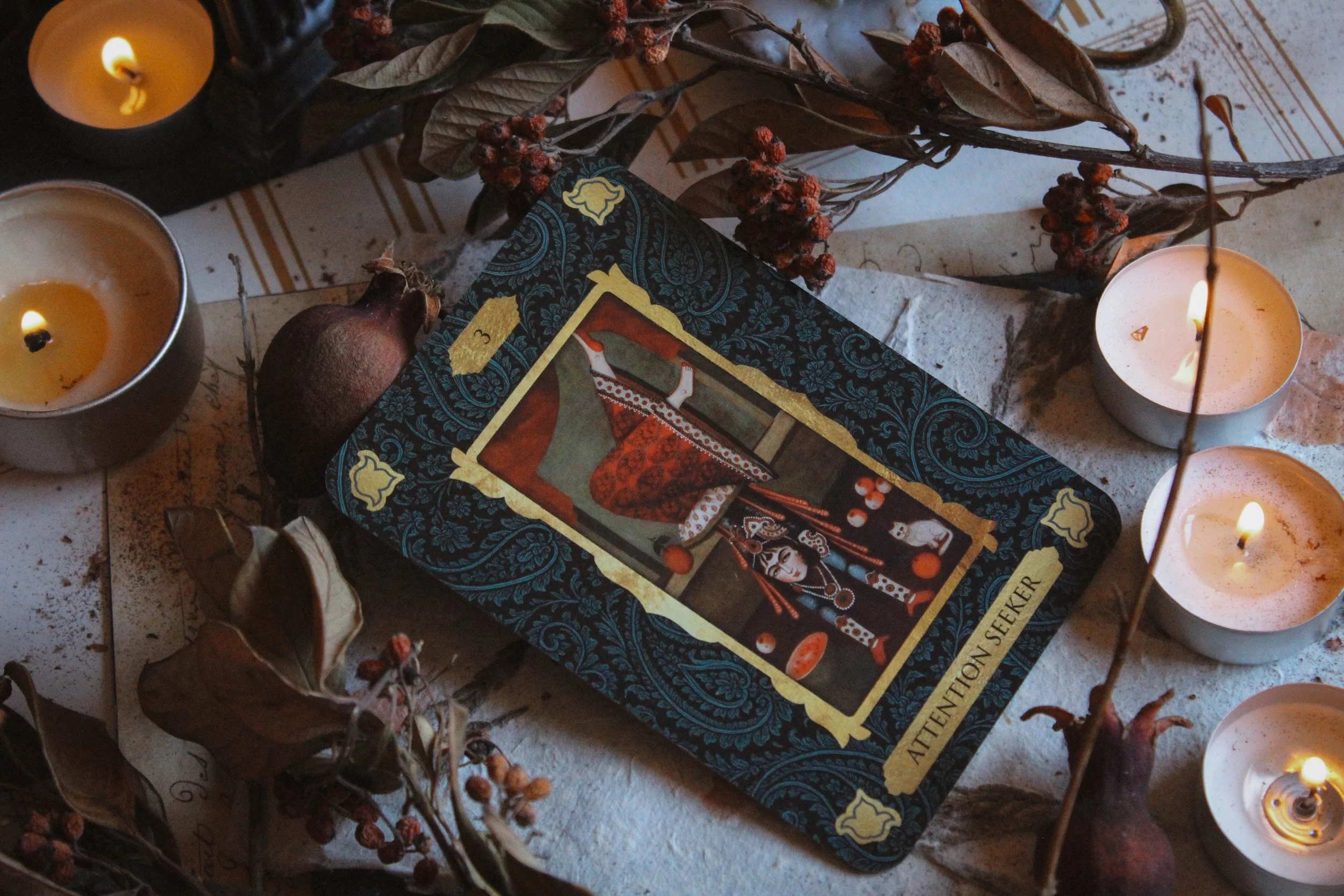
My favorite card
The Artwork
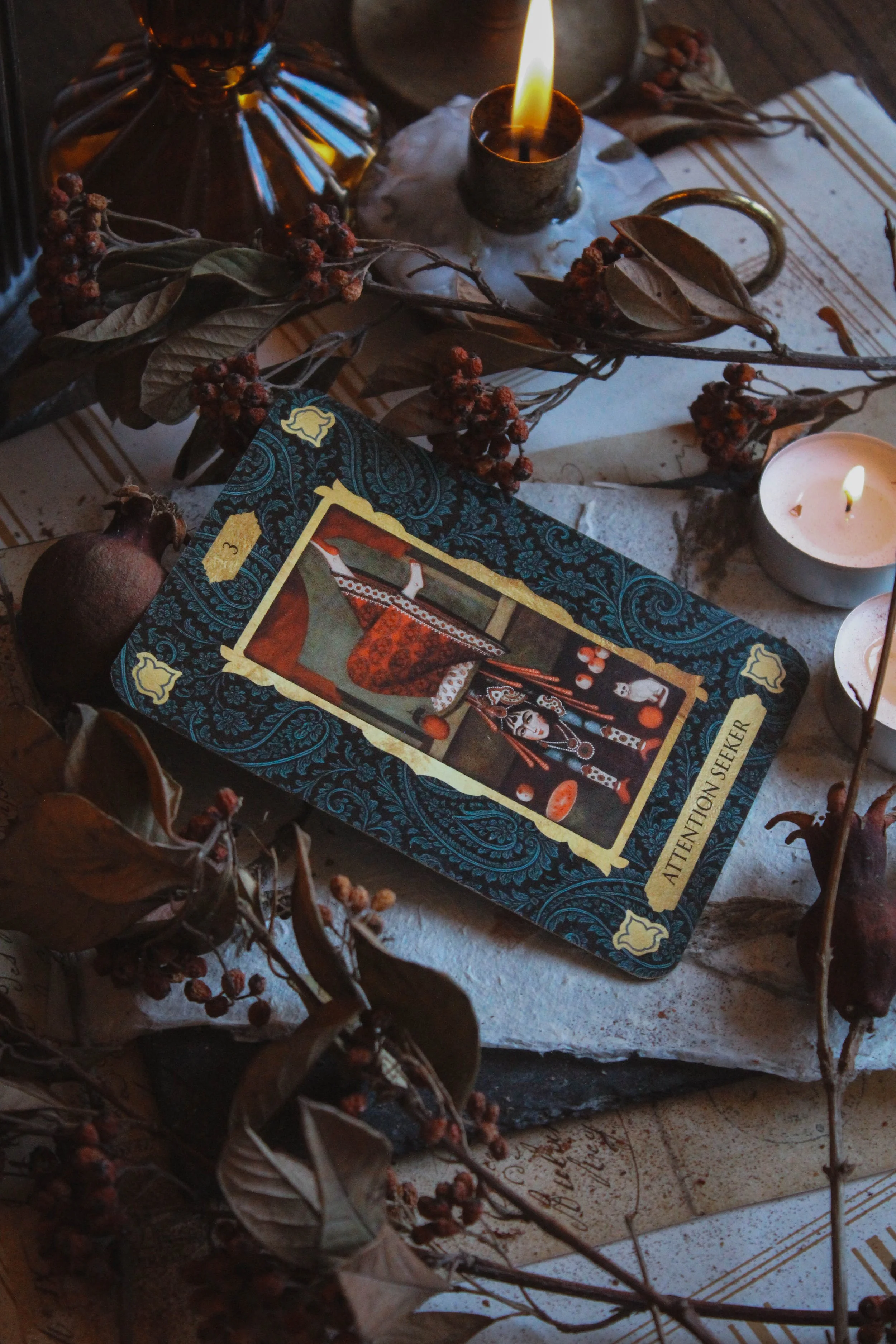
My favorite card is called Attention Seeker. I like the way it looks but also I love the name. I actually think the term “attention seeker” is seen as something problematic but I don’t think that’s always the case. The woman in this image looks to be a performer and doesn’t a performer need to be someone who is comfortable with attention? Perhaps even goes out of their way to seek it as a way to stand out. Rather than someone seeking attention, I see someone who is graceful, flexible and perhaps entertaining.
“In creating this deck my intention was to blend the beauty of Qajar art with the wisdom of cartomancy, crafting a tool that can offer both joy and insight to those who use it. ”
I don’t think any work has been done to the artwork other than perhaps cleaning it up a bit for printing. The images themselves are quite colorful but in a muted sort of way that is not all that out of the ordinary for older art. Of course pigments fade over time and I wonder how much brighter they might have been at some point. You definitely see a lot of greens and reds and what’s interesting is that each image has a different shape. Some are square and some are round while others have arches. There’s a lot of variation here that makes it feel richer, especially with the heavy blue border.
Reading With this Deck
I will say that I’ve relied mostly on my own interpretation of the cards versus what’s in the guidebook. The entries have a great explanation of what each personality trait means and how it has come to be but what I think is lacking is guidance. It tells you a whole lot about the description of each trait but not necessarily what to do with the card once you pull it. Or even what it could mean in a reading. However, I think the names are pretty straightforward which allows you to easily read these intuitively.
Having said that, the cards do feel accurate. I did my first few readings in early July which was a pretty challenging time at home and with my family. One thing this deck did really help me to understand is how much I’d been hovering over my mom. Some of you may know that she’s been sick this year and I have definitely turned into a bit of a mother hen. I’ve basically been acting like a babysitter, monitoring everything she does. It’s coming from a place of love and concern of course but ultimately, it wasn’t healthy for me or her.
I used this deck a lot in reference to that situation and it really did help me to detangle some of the more toxic or perhaps limiting actions I had allowed myself to lean into. Likewise, it helped me to understand my mom’s perspective more and also to understand some of the ways she was being limited towards me.
I do think this deck is rich psychologically. Could it use more guidance and practical advice? Yes, absolutely. However, if you’re wanting to understand actions and motivations more, then I think this is a great deck to use.

With companion deck
Season, Sign, Element and Sabbat
I chose late summer for the season. This deck is kind of harsh. Some of the descriptions of the personality traits are really clinical and even severe. And the figures in the artwork seem to look directly at you as if they’re calling you out in a very obvious way. I don’t feel uncomfortable using the deck at all but I do kind of feel exposed which made me think of late summer. Where I live, late summer is definitely the hottest part of the year. It feels a little overwhelming but also hopeful because I know cooler weather is just around the corner. But there’s still that intensity and I get a similar feeling from this deck.
I chose Scorpio for the zodiac sign because no one is intense like a Scorpio. And Scorpios can be quite clinical and severe too. They have a lot of depth and they see things others don’t but aren’t always so skilled at sharing useful information in a way people can understand. I should know, I am a Scorpio!
I chose Samhain for the sabbat mostly because of ancestral connection. I think working with a cultural centric deck like this always feels like it connects to heritage and those who came before, even if you aren’t Persian. There’s something grounding about working with older imagery and old things which is why I think so many people are loving vintage right now. It offers a sense of belonging and support that I think is really lacking in the digital age. And I chose earth for that same reason. This deck is a little bit intense but also grounding.
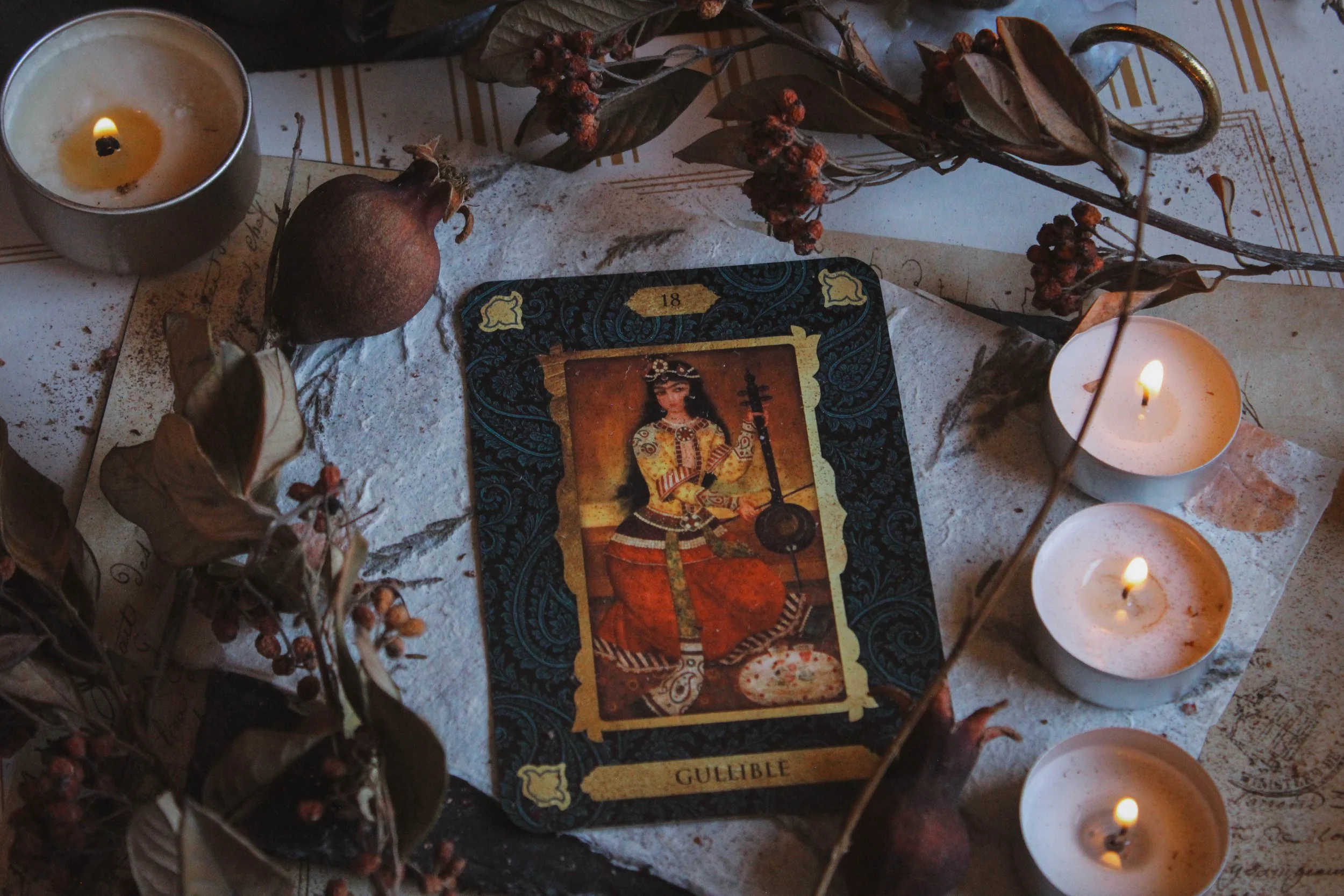
Collective Pull
Collective Pull
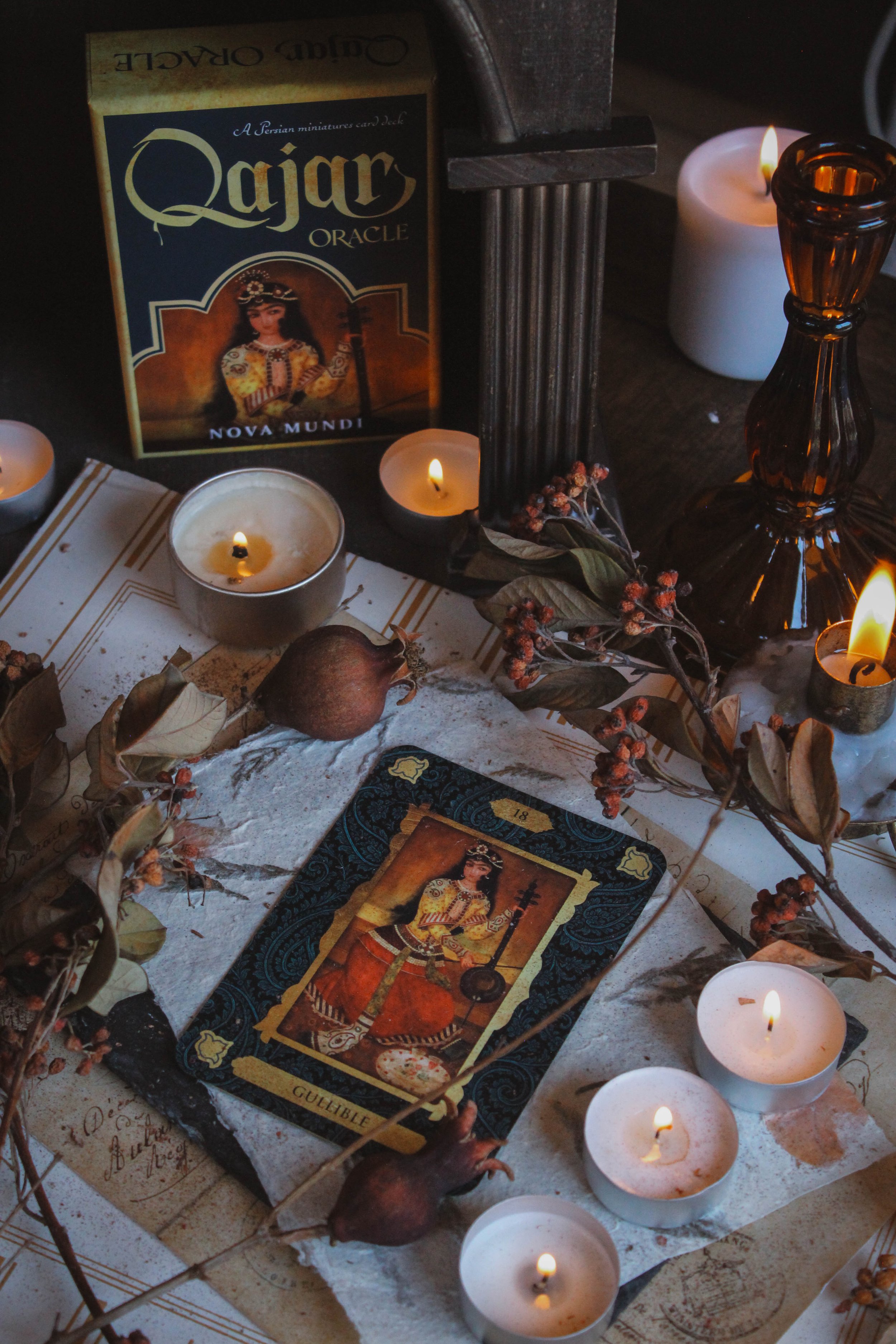
I pulled Gullible for you. This card encourages you to be mindful of accepting information at face value. Do your research before blindly accepting what is in front of you. That can mean seeking additional information, reaching out to a trusted source, or even just checking in with your intuition before making a rushed decision. Gullibility can stem from a number of reasons including a lack of information. Let this card also encourage you to broaden your horizons just for the sake of obtaining more life experience. However, remember that trust is not necessarily a bad thing. To have the freedom to see the good in others is a gift but one that can easily be exploited. Always give yourself the time and space needed to question the validity of something. Even if you do trust something in the end, at least you gave yourself a chance to consider alternatives first.
Who is this deck for?
If you’re an artsy witch and enjoy learning about different periods of art then give this one a try. It’s always great when a ritual tool can help you find more meaning and guidance but also can serve your life in other ways.
If you have any interest in Qajar art at all, especially as a tool for guidance then this deck seems like a no-brainer. It’s quite beautiful, insightful and feels pretty unique in today’s crowded deck market.
Deck Companion
I choose the Smith-Waite Centennial Edition for the companion deck. It took me a while because I don’t have Persian Tarot that would carry the same historical significance and I wanted to be intentional about this. But I realized, the Smith-Waite deck in this version has a similar, antique, old-world kind of feel. And just in general, I think you can’t go word with Smith-Waite anyway. Its the deck the vast majority of use learned to read tarot with and probably impacted the author as well. And frankly, they just look good together. They don’t compete energy wise and so far, seem to play off of each other well. Also, I just love this version of the Smith-Waite, way more than the regular one.

Influencer & Oppressor
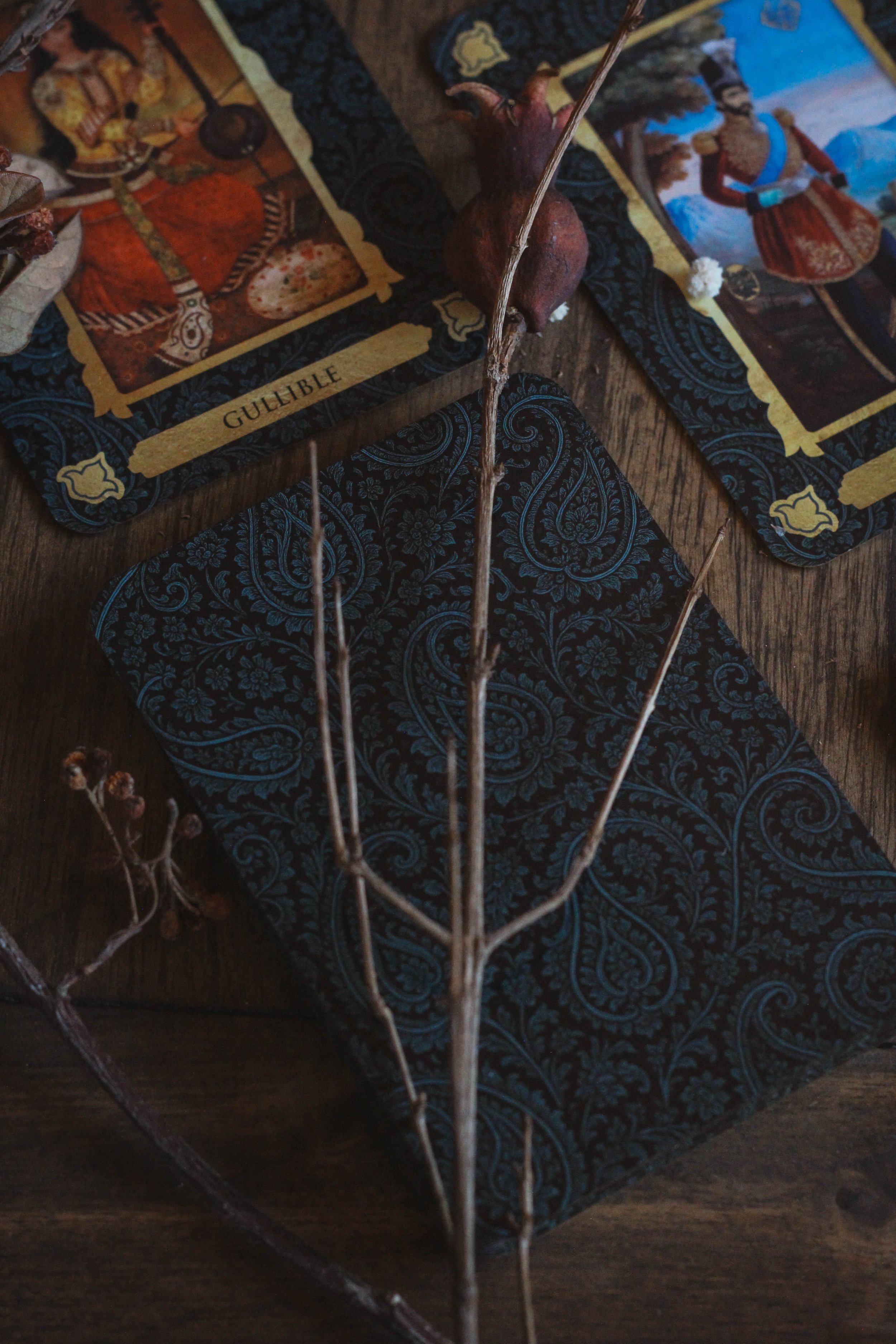


Back of cards